
She is funding trans genocide. J.K. Rowling funds trans genocide, full stop. So, if you support ‘Harry Potter’, you’re supporting trans genocide. The money that goes into you enjoying these products, a portion of that money goes to J.K. Rowling and that money goes into her funding anti-trans legislation all over the world. In the same way that if you are against Elon Musk, you boycott or don’t buy Tesla; and if you’re against global warming/climate change, you try not to buy as much gas, you try to mitigate your use of these products. It’s simple math. So, your enjoyment of these shows, and continued support of these shows, is supporting my eradication.
Lilly Wachowski’s recent comments on J.K. Rowling caused a predictable stir. While explosive, her accusation that Rowling is ‘funding trans genocide’ is, in fact, correct, and Wachowski deserves credit for being willing to name what others continue to evade and deny. Her language is consistent with the analysis of genocide-prevention experts at the institute bearing the name of Raphael Lemkin, who developed the legal and intellectual framework through which genocide came to be understood. The Lemkin Institute for Genocide Prevention has repeatedly described the ‘gender-critical’, or transphobe movement as genocidal, warned of an escalating genocidal process against transgender people, and argued that attempts to erase trans people as a group constitute genocidal intent. The outrage over Wachowski’s language therefore tells us less about the accuracy of the accusation, and more about how poorly genocide is understood.
That confusion has been exacerbated over the past three years, as Israel and defenders of its genocide in Gaza have fought relentlessly over the meaning and application of the term itself. Most recently, more than 5000 figures from entertainment, public life and ‘across academia’ signed an open letter organised by Creative Community for Peace rejecting the finding of genocide and describing the accusation itself as a ‘lie’. Their intervention came in direct response to the United Nations Commission of Inquiry’s conclusion that Israel had committed genocide in Gaza. The result of this ongoing propaganda campaign has been a persistent narrowing of understanding of genocide in public discourse, generally being defined as total physical extermination: a definition that bears little resemblance either to Raphael Lemkin’s original conception, or to the broader processes through which groups can actually be destroyed.
Is it Genocide?
Rowling, who is usually fond of running her mouth, didn’t respond herself. She instead had her agent Neil Blair respond for her. Blair wrote that:
Freedom of speech is a principle we should all cherish. What matters is that J.K. Rowling’s views, as with anyone else’s, are represented accurately, fairly and respectfully and that individual opinion does not detract from those views. To correct Lilly Wachowski, through The J.K. Rowling Women’s Fund, J.K Rowling supports women taking legal action in the UK to preserve their existing rights under the Equality Act 2010, which are often overlooked or threatened. She does not support legal actions aimed at harming transgender people or efforts to limit trans rights.
People are free to disagree with her views but seriously defamatory allegations of this nature, even outrageously invoking the Nazi[s] and the genocide that they committed, should never be presented as fact when they are clearly fabricated and not based on any evidence.
Unsurprisingly, Team Rowling put out a disingenuous, passive-aggressive statement riddled with inaccuracies, posturing as authoritative correction. Firstly, it is neither inaccurate, unfair, nor disrespectful, to state that Rowling funds harm to trans people. Blair’s claim that Rowling merely funds women seeking to ‘preserve their existing rights’ is misleading. Rowling has used her personal fortune to finance legal action aimed at restricting the legal recognition and rights of trans people. In 2024, she donated £70,000 to For Women Scotland to support its Supreme Court challenge over the legal definition of ‘woman’. The Supreme Court unanimously held that references to ‘sex’, ‘man’, and ‘woman’ in the Equality Act 2010 mean biological sex. The following year she established the privately funded J.K. Rowling Women’s Fund specifically to pay the legal costs of individuals and organisations pursuing ‘sex-based rights’ cases involving employment, public life, sport and single-sex spaces.
The litigation has had concrete consequences for trans people in Britain. Following For Women Scotland’s successful Supreme Court challenge, a Gender Recognition Certificate no longer makes a trans woman a ‘woman’, or a trans man a ‘man’, for the purposes of the Equality Act 2010, affecting the operation of sex discrimination law and rules governing single-sex services, changing facilities, healthcare, accommodation, associations, sport and public bodies. The Court’s decision therefore limited what legal gender recognition means under the Equality Act, despite trans people retaining separate protection under the protected characteristic of gender reassignment. This means that Harry-Potter-funded wealth contributed directly to litigation that changed the legal position of trans people and to the resulting guidance governing their treatment in everyday life. Framing this as a defence of ‘sex-based rights’ functions as propaganda, downplaying the removal of protections from trans people.
Other propagandistic language appears in Blair’s description of Wachowski’s comments as an ‘outrageous invocation of the Nazis and the genocide they committed’. This is particularly notable given Blair’s own involvement in explicitly pro-Israel organisations: he is a director of StandWithUs UK and chairs British Friends of United Hatzalah Israel, to which public filings record substantial personal donations. Rowling and Blair both signed the same 2015 letter opposing a cultural boycott of Israel, and Blair was one of the signatories listed on it. Blair attempts to invoke post-Holocaust anxiety in readers by utilising Holocaust exceptionalism: the idea that the Holocaust was a unique event against which other genocides are treated as incomparable or somehow less legitimate. Israel’s resistance to recognising genocide did not begin with Gaza: for decades, it withheld recognition from the Armenian, Assyrian and Greek genocides of the late Ottoman Empire while investing heavily in reproducing its preferred historical narrative across successive generations. There is no legitimate reason for Blair to bring up Nazis in his statement. This reveals the extent to which this type of propaganda relies on the emotional and political weight of the Holocaust, and here Blair uses it to discredit Wachowski’s use of the term ‘genocide’.
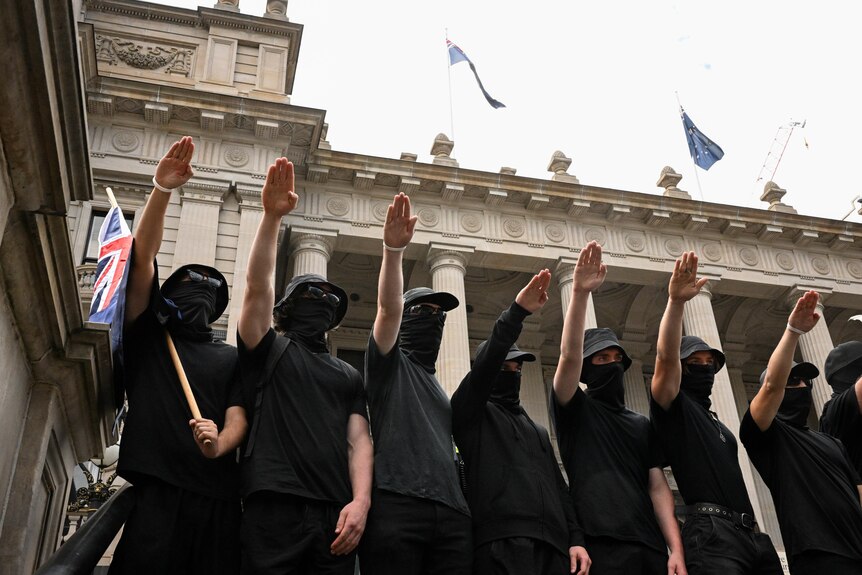
There is another irony in Blair’s indignation at the invocation of Nazis. Neo-Nazis and white supremacists have repeatedly mobilised around anti-trans politics because its language of ‘degeneracy’, ‘grooming’, ‘social contamination’ and the ‘protection of children’ is entirely compatible with their own ideology. Anti-trans politics has not merely attracted fascists from the outside, it has become one of the issues through which contemporary fascist movements organise, recruit and present themselves publicly.
As I stated earlier, Wachowski’s use of the term ‘genocide’ is correct. It is not ‘defamatory’. It is worth looking at what the existing Genocide Convention actually says. Article II of the 1948 Convention defines genocide as follows:
Article II
In the present Convention, genocide means any of the following acts committed with intent to destroy, in whole or in part, a national, ethnical, racial or religious group, as such:
(a) Killing members of the group;
(b) Causing serious bodily or mental harm to members of the group;
(c) Deliberately inflicting on the group conditions of life calculated to bring about its physical destruction in whole or in part;
(d) Imposing measures intended to prevent births within the group;
(e) Forcibly transferring children of the group to another group.
Even this restrictive and dated definition is considerably broader than the popular understanding of genocide as mass killing. It encompasses serious bodily and mental harm, destructive conditions of life, interference with reproduction and the forcible transfer of children. Where we run into problems is not with whether many of the practices examined below are recognised as genocidal acts, but with the Convention’s restricted definition of the groups to whom those protections apply. The Convention emerged from political compromise and deliberately restricted protection to national, ethnic, racial and religious groups, excluding others and abandoning broader concepts such as cultural genocide. This has left groups defined by characteristics such as disability, sexuality and gender identity outside its legal framework, despite the systematic killing and persecution of disabled people, gay men and gender-nonconforming people under Nazism, for example. Further problems arise from the Convention’s reliance on categories such as ‘race’, a historically contingent system of classification with no biological basis, and from a legal architecture centred heavily on individual criminal responsibility. Genocide, however, is generally a state-organised process, while international law has proved far more effective at prosecuting individuals than holding states themselves accountable.
Who Gets Protected?
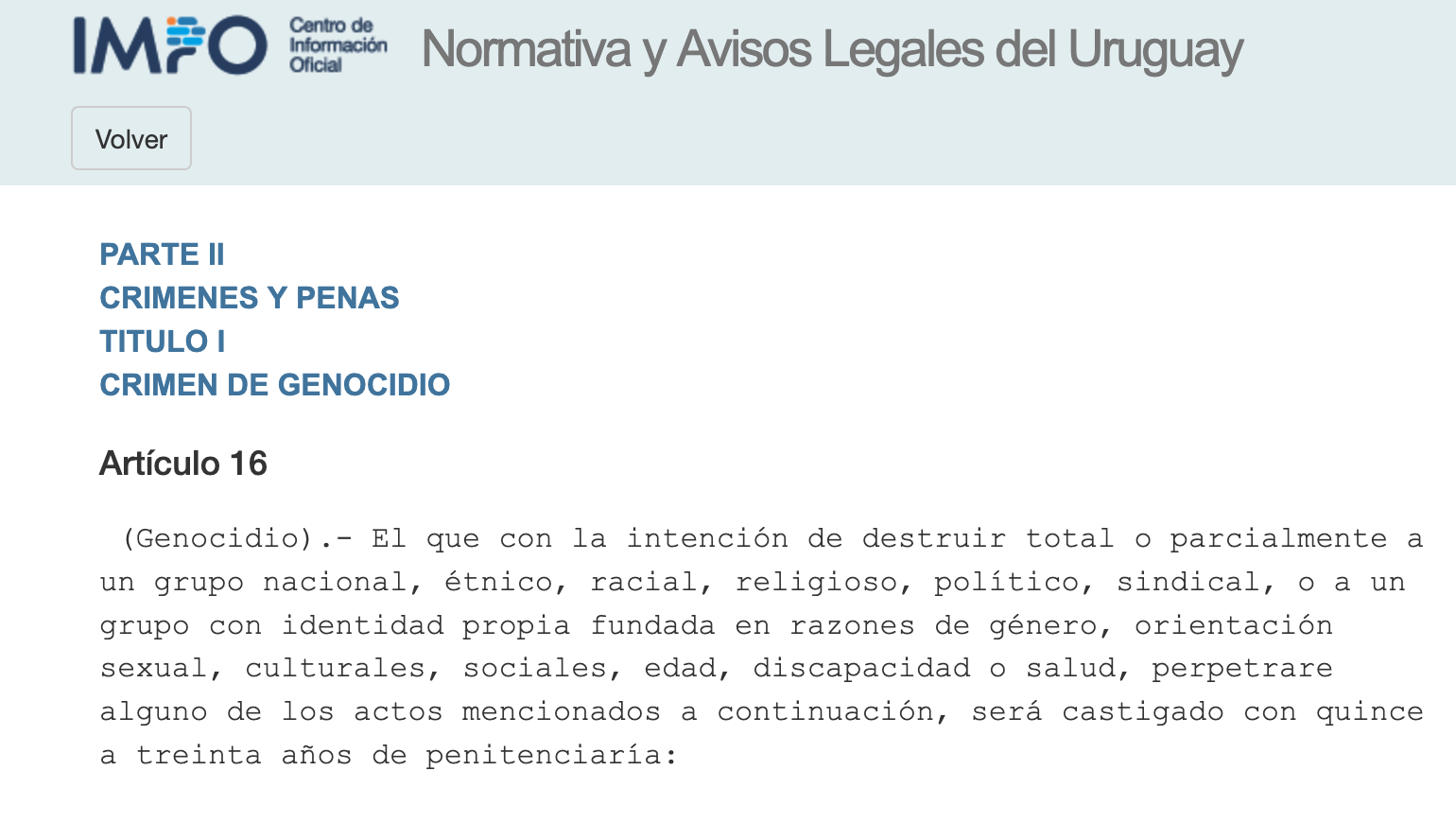
Some states have already gone beyond the Convention’s narrow list of protected groups in their domestic genocide laws. Uruguay, for example, criminalises genocide against political and trade-union groups as well as groups identified by gender, sexual orientation, social or cultural background, age, disability or health, demonstrating that broader definitions are not merely theoretical proposals. A more useful way of understanding genocide is therefore as a process directed against what Jordan Pope calls an ‘identifiable human group’. Pope proposes replacing the Convention’s restrictive list of protected groups with this broader formulation, allowing genocide law to respond to groups targeted because of characteristics that were excluded in 1948.
Trans people plainly constitute an identifiable human group, and Gregory Stanton’s Ten Stages of Genocide provide a useful framework for examining what is happening to that group. Kassandra Caton analyses the treatment of transgender people in the United States through Stanton’s Ten Stages. Caton demonstrates how contemporary anti-trans legislation maps across Stanton’s non-linear stages, from classification and discrimination through dehumanisation, persecution and denial. At the time of Caton’s study, 609 anti-trans bills had been introduced in the United States in 2023, with a further 620 already introduced by July 2024. Caton demonstrates that those figures were not an aberration but part of an accelerating legislative campaign. Trans Legislation Tracker records 174 anti-trans bills in 2022, rising to 615 in 2023, 701 in 2024 and 1,022 in 2025; 126 of the 2025 bills passed. By September 2026, a further 835 bills were under consideration and 63 had already passed. These invasive measures have targeted healthcare, education, bathrooms, birth certificates, employment, incarceration, adoption, the military and other areas of public and private life. This illustrates the disproportionate amount of legislative activity directed towards a tiny minority of the population.
Recent scholarship has described this broader political project as ‘trans eliminationism’. Jaimie Veale uses the term for efforts to remove trans people from social, legal, conceptual or physical existence, emphasising that eliminationist processes can begin through apparently bureaucratic measures such as administrative erasure, healthcare denial, legal restriction and exclusion from public life rather than overt physical violence. This provides a useful contemporary parallel to Lemkin’s own understanding of genocide as a cumulative process directed at the destruction of the foundations of group life. Eliminationism need not be understood as an alternative to genocide, but as one of the processes through which genocide operates: the progressive removal of a targeted group from social, legal, institutional and, ultimately, physical existence.
What Lemkin Meant by ‘Genocide’
Generally speaking, genocide does not necessarily mean the immediate destruction of a nation, except when accomplished by mass killings of all members of a nation. It is intended rather to signify a coordinated plan of different actions aiming at the destruction of essential foundations of the life of national groups, with the aim of annihilating the groups themselves. The objectives of such a plan would be disintegration of the political and social institutions, of culture, language, national feelings, religion, and the economic existence of national groups, and the destruction of the personal security, liberty, health, dignity, and even the lives of the individuals belonging to such groups–Raphael Lemkin, Axis Rule in Occupied Europe
Lemkin’s original conception of genocide, developed in the 1930s and 1940s, is perhaps more relevant now for understanding the contemporary persecution of trans people than the Convention that followed it. As we can see, Lemkin understood genocide as a process directed towards the destruction of a human group, in which individuals were targeted, not primarily as individuals, but because of their membership of that group. Lemkin’s thinking extended beyond killing alone to the deprivation or prevention of life and to measures that endangered the life and health of members of the targeted group. For these reasons, I apply Lemkin’s framework here to the treatment of trans people, examining the extent to which contemporary legal and political measures reproduce mechanisms he identified as characteristic of genocidal processes.
Lemkin listed eight processes or ‘fields’ of genocide in Axis Rule in Occupied Europe: political, social, cultural, economic, biological, physical, religious, and moral. It is also important to emphasise that Lemkin viewed genocide as a process of occupation, and its fields are based on his experiences during the Nazi occupation of Poland. Trans people are not occupied in this literal sense, but they similarly exist as a small minority within societies whose legal, political and social institutions are overwhelmingly controlled by a majority. I am now going to apply five of Lemkin’s fields to anti-trans legislation and practices.
Social genocide
Lemkin based the social field of genocide on the weakening of the social structure of a group. He identified this process in the replacement of a group’s laws, institutions and even its language by those of the dominant population, as well as in the targeting of activists and other sources of social leadership. A similar process can be seen in measures requiring trans people to be classified according to sex assigned at birth and imposing cisnormative language and categories upon schools, government agencies and other public institutions. The refusal to recognise gender identity, preferred names, or appropriate gendered terminology does not merely regulate language; it determines the terms on which trans people are permitted to exist within institutional and public life. This process is also evident in the exclusion of trans women from women’s services and spaces, including domestic-violence shelters, where access to institutional protection is made dependent upon classification according to sex assigned at birth.
Examples:
Cultural Genocide
Lemkin conceived cultural genocide as the suppression of a group’s language, education, intellectual life, artistic expression, and access to the cultural institutions through which its identity was preserved and transmitted. Modern parallels can be seen in measures directed at trans people within educational and cultural institutions, including suppressing trans language and discussion in schools, restricting teaching about gender identity, banning or removing reading material, limiting trans representation in libraries and other cultural institutions, and regulating which forms of trans expression may appear in public or educational settings.
Examples:
Education: Florida Statutes §1001.42
Books/readings: PEN America, Facts & Fiction
Libraries/cultural materials: American Library Association, Censorship by the Numbers
Cultural representation/history: Reuters, ‘Trump erasure of transgender references extends to Stonewall monument website’, plus the National Park Service Stonewall material
Economic Genocide
Lemkin framed economic genocide as the destruction or weakening of a group’s economic foundations, reducing its members to material insecurity and a struggle for survival that undermined their capacity to sustain collective cultural and social life. Participation in economic life was made dependent upon belonging to the dominant group. Similar weakening of economic security for trans people can be seen in systematic exclusion affecting employment, housing, income, welfare, and the material conditions necessary for trans people to live independently.
Examples:
Williams Institute, “Workplace Experiences of Transgender Employees” (2024). Among the transgender employees surveyed, 53% reported being fired, not hired, not promoted, or otherwise discriminated against at work because of sexual orientation or gender identity within the previous five years; 60% earned under US$50,000 annually.
Williams Institute, “LGBTQ People in the US: Select Findings from the Generations and TransPop Studies.” It found that 48% of transgender respondents had been fired or denied a job at least once as adults, while 17% had experienced an adverse housing event involving a landlord or real-estate agent, compared with 7–8% among the cisgender LGB comparison groups.
Physical genocide
Lemkin did not conceive physical genocide simply as killing. His three principal categories were racial discrimination in feeding, endangering health, and mass killing. In this sense, the physical genocide of trans people might be considered through attacks on health and physical integrity, including forced detransition, the denial or withdrawal of medically necessary gender-affirming healthcare, exposure to violence, and policies that foreseeably cause serious bodily or psychological harm. These mechanisms also overlap with conduct identified in Article II(b) and, in some circumstances, Article II(c) of the Genocide Convention.
Examples:
Healthcare bans and forced withdrawal of treatment
Denial of gender-appropriate healthcare in prisons and detention
Disproportionate exposure to anti-trans violence
Biological genocide
Lemkin conceived biological genocide as a ‘policy of depopulation’, aimed at preventing a group from reproducing and perpetuating itself across generations. An analogous process might be found in measures directed specifically at preventing young people from developing or continuing a trans identity, including restrictions on transition intended to ensure that they do not enter adulthood as openly trans people. Such measures overlap with physical genocide where they also involve the denial of healthcare or produce serious harm, but their significance within the biological field lies in their attempt to reduce or prevent the continuation of the group across generations.
Examples:
I have now demonstrated that anti-trans legislation and practices constitute genocide, including through acts already recognised under the existing Genocide Convention. Any limitation lies not in the genocidal character of these acts, but in the Convention’s restrictive definition of the groups entitled to protection.

Should You Watch Harry Potter?
Article III
The following acts shall be punishable:
(a) Genocide;
(b) Conspiracy to commit genocide;
(c) Direct and public incitement to commit genocide;
(d) Attempt to commit genocide;
(e) Complicity in genocide.
Article III of the Genocide Convention also makes complicity in genocide punishable. Legal scholars and human-rights organisations have already raised the possibility that universities and their officers may incur complicity risks through investments, research relationships and other forms of material support connected to Israel’s genocide in Gaza. The same principle makes financial participation relevant when considering Rowling’s actions, which have not been confined to speech, but included substantial financial support for legal action aimed at restricting the recognition and rights of trans people. Whether that conduct ultimately falls within any legal category of complicity is a separate question; the factual basis for describing her as funding an anti-trans political project is clear. Wachowski’s statement that Rowling is ‘funding trans genocide’, and Blair’s decision to characterise that statement as ‘defamatory’, therefore become especially significant. The charge of ‘defamation’ attempts to deflect to a dispute over the interpretation of documented actions, as though the actions themselves were fabricated. Rowling’s financial support for anti-trans legal action is not in dispute; what is contested is whether that support funds a genocidal process. The preceding analysis demonstrates that it does.
The question, then, is what Harry Potter has to do with any of this. Quite a lot, actually. Rowling’s phenomenally successful books created both her extraordinary wealth and the cultural platform from which she continues to exercise considerable influence. The new HBO Harry Potter series will add to that extraordinary wealth directly. While many fans claim they can separate the art from the artist, this does not work when the artist is alive, well, and funding genocide. I do not say this without sympathy. I was once a devoted, adult Harry Potter fan, bought the books, watched the films, and ugly-cried when Hedwig died. A couple of years ago, I even tried to reread the books, after encountering one of the dozens of articles reassuring former fans that they could continue to enjoy Harry Potter while ignoring Rowling’s politics. I couldn’t get past the first page of Philosopher’s Stone. The books felt alien to me; they seemed to belong to a different world, from before their creator devoted so much of her public influence to attacking one of society’s most marginalised minorities.
I think it is also worth looking closely at what the books actually contain, rather than treating nostalgia as a reason not to examine them. Nostalgia is, after all, a disease. It is a distinct issue in historical memory, sugar-coating the past until it becomes comforting enough to ‘miss’. The same instinct can operate on beloved cultural texts: affection for what they once meant to us can make us reluctant to see what was always there. It was only with distance from the books that I began to recognise how much of their worldview I had once unconsciously accepted as normal. The explicit politics of Harry Potter are fairly conventional. Rowling herself has described them in straightforward terms:
I think that if you’re, I think most of us if you were asked to name a very evil regime we would think Nazi Germany. There were parallels in the ideology. I wanted Harry to leave our world and find exactly the same problems in the wizarding world. So you have the intent to impose a hierarchy, you have bigotry, and this notion of purity, which is this great fallacy, but it crops up all over the world. People like to think themselves superior and that if they can pride themselves in nothing else they can pride themselves on perceived purity.[…]The Potter books in general are a prolonged argument for tolerance, a prolonged plea for an end to bigotry…
Despite these generally bland explicit politics, the books themselves are considerably more ideologically complicated. More broadly, the problems with the series are not confined to one issue. The series reproduces class hierarchy, slavery, racialisation, conventional gender roles, fatphobia and other appearance-based moral coding, institutional conservatism, and a politics that condemns individual prejudice without seriously challenging the social structures that produce it.
I just want to point out two of the issues that really highlight Rowling’s normative, conservative ideology that seem to fuel her obsession with diminishing transgender women’s rights. One is, in fact, the alleged Holocaust parallel. Rowling herself describes Harry Potter as an argument against bigotry and racial hierarchy. The Death Eaters are an unmistakably genocidal movement, organised around blood purity, the persecution of Muggle-born witches and wizards, and the subordination of Muggles themselves. Yet within the broader culture of Harry Potter, this genocidal faction is absorbed into a spectrum of identities from which readers can choose or be assigned, becoming a mere symbolic affiliation alongside the houses and other fandom categories. Responsibility for this ideology is increasingly concentrated in Voldemort and a relatively small number of committed followers. The broader social class from which the movement draws much of its support is never subjected to the same scrutiny. Draco Malfoy, for example, is ultimately presented as a frightened young man trapped by circumstances rather than as someone who actively participated, for years, in a supremacist movement. His parents did the same. Yet all three are permitted to return to respectable family life, with Lucius and Narcissa’s status as parents ultimately overtaking their status as genocidaires. The conclusion thus allows surviving members of the magical elite to be rehabilitated through family and reproduction, rather than requiring any meaningful reckoning with their participation in supremacist violence.
The ending makes this especially clear. Rather than imagining a transformed social order, the series closes with marriage, children, respectable domesticity and the continuation of the same institutions. It also reveals what might be called Rowling’s ‘reproductive futurism’.
Coined by Lee Edelman, reproductive futurism critiques the way political and social systems are organised around the idealised, redemptive figure of ‘the Child’, through which heteronormative social structures are reproduced and maintained. The future belongs to those who marry, reproduce, and successfully integrate into conventional family life. After a story structured around racism, authoritarianism and genocidal persecution, the final image is not social reconstruction but the restoration of ‘normality’: whiteness, heterosexuality, heteronormative family structures and cisgender identity.
J.K. Rowling has long played the victim in this. In the same way she asks us to empathise with genocidaires in her books, she asks us to empathise with her bigotry. This isn’t about ‘sex-based rights’, but about defending a social order organised around whiteness, heterosexuality, cisgender identity, and conventional family structures. The emphasis is repeatedly shifted from the people affected by these bigoted movements to the feelings, intentions and supposed persecution of those exercising power. In Rowling’s world, the frightened Death Eater becomes more deserving of sympathy than the people his movement seeks to subordinate; Rowling, similarly, presents herself as the besieged defender of rights rather than an extraordinarily wealthy public figure using her money and influence to restrict the rights and recognition of a marginalised group.
Harry Potter created Rowling’s wealth and continues to sustain her cultural power. She has chosen to use part of that wealth to support legal action directed against trans rights and recognition. Rowling has chosen to fund genocide. Fans can decide for themselves what they watch, read or buy. They may decide that their attachment to Harry Potter matters more. They may decide that it does not. But the argument should at least begin from what is actually happening, rather than from the comforting fiction that Harry Potter can now be separated from the political power it continues to generate. Harry Potter funds genocide. You might not be directly complicit in that genocide, but you are furthering its ideology by supporting its author. You are not a trans ally if you can’t give up a television series, a theme park, a video game, or a childhood fantasy when the money and cultural power attached to them are being used against a besieged minority.
Say what you want about the books. Say that they raised you, comforted you, or helped make you who you are. Say that you still love them. But don’t call continued financial support and endorsement harmless.
And don’t say it’s not genocide.
