It’s almost a rhetorical question: can Enid Blyton be modernised? Of course she can. And anyone still unconvinced need only look at the ninety-four episodes of the Malory Towers tv series. Some disgruntled Enid Blyton fans (and I suspect there are not many) are complaining about the 2026 film The Magic Faraway Tree, based on Enid’s Faraway Tree tetralogy, and its treatment of the ‘source material’. A great many Enid fans were probably introduced to her through the Dean editions of the 1970s and beyond: small, colourful hardback reissues of her most popular titles. They are therefore likely to remember the books chiefly for their adventures. The Faraway Tree books, as they are popularly known, were easily among her most popular titles. But they are, in fact, rather different from Enid’s other famous series, including The Famous Five, The Secret Seven, The Five Find-Outers, the Adventure series and her various school stories. All of those series feature middle-class children. They live in secure homes, take paid holidays, own bicycles, have staff or household help, and possess enough money for boarding-school fees. Middle-class security sits in the background, while parental authority is conveniently suspended.
The family in The Enchanted Wood, the first title in the Faraway Tree series, is demonstrably working class—indeed, poor. It is not Enid’s only book to feature a working-class family, although this is generally overlooked in broader criticism of her work. This does not make Enid a champion of the working classes, far from it, but it is worth considering whether the Faraway Tree books in particular reflect something of her personal experience.
When I think about the ‘source’ of an Enid story, I think about Enid herself. All her books seem to contain some small piece of her own world, even when they do not reproduce a direct experience. The Six Bad Boys, for example, a rare attempt at social realism, appears to have been inspired by her friendship or professional association with Basil Henriques, a longtime juvenile-court magistrate who worked with disadvantaged children in London’s East End. Henriques did substantial work for deprived children and supported some progressive causes, but he was also deeply paternalistic and misogynistic. In 1950, he supported a motion condemning married women who worked outside the home, blamed working mothers for juvenile delinquency, and claimed that women were not men’s equals except in matters such as washing babies and washing up. The motion was defeated. His views, however, seem to have influenced Enid’s appalling depiction of Bob’s mother in The Six Bad Boys: a widow whose great crime is going out to work because she feels isolated at home.
In the Faraway Tree books, however, we might look a little closer to Enid’s own home. Enid had a deeply unhappy upbringing after her parents separated when she was thirteen. Her father, whom she idolised, left the family for another woman, while Enid and her mother, Theresa, did not get along at all. Theresa did not support Enid’s writing and was determined to turn her into a housewife. Small wonder that so many of Blyton’s schoolgirls leave school for university or employment, even if Enid still imagined that marriage would eventually place a woman at the centre of the household.
Their relationship deteriorated further when the family was forced to move into a smaller house and Enid lost the large bedroom that had served as her study and sanctuary. She left home as soon as she could, aged eighteen, to live with a friend’s family and train as a teacher. She never saw her mother again.
We do not often see Enid’s experiences reflected directly in her books, perhaps with the exception of The Six Bad Boys, where three children cower at the top of the stairs, listening to their parents quarrel as their family breaks apart, a scene from Enid’s own life. But more often, her unhappy childhood seems to be reflected in her repeated desire to imagine a good family: not a perfect family, but one that pulls together through adversity.
Given Enid’s strained relationship with her mother, it is striking that Jo, Bessie and Fanny’s mother is the principal parent in the Faraway Tree books, while their father remains a more distant figure. Father is also poor—not merely lower middle class, but poor enough that he cannot afford a taxi from the railway station to the family’s new home in the country, forcing them to walk five miles.
Although the poor family is a conventional fairy-tale motif, it is nevertheless jarring to encounter the following passage in an Enid Blyton book:
Things did not go very well the next week. Father lost some money one night, and Mother could not get very much washing to do. So that money was very scarce, and the children did not have as much to eat as they would have liked.
The family’s poverty is not merely background detail. Their move to the country is determined by Father finding work there, while Mother hopes to take in washing so that she can earn enough money to buy hens and reduce the household’s food costs. The magical abundance of the Faraway Tree is therefore set against material deprivation at home.
When the children visit the Land of Take-What-You-Want, they don’t choose extravagant toys or luxuries. They bring back hens, a goat, household necessities and a new spade for Father’s garden. The fantasy is repeatedly directed towards the family’s survival. In a fairy story remembered chiefly for cakes, toffee and magical adventures, the Faraway Tree offers not an escape from a secure middle-class home, but temporary abundance to children whose ordinary lives are defined by work, scarcity and the possibility that one small financial loss might leave the family without enough food. The magic does not replace the family or rescue the children from it. Instead, it enables them to help sustain the household.
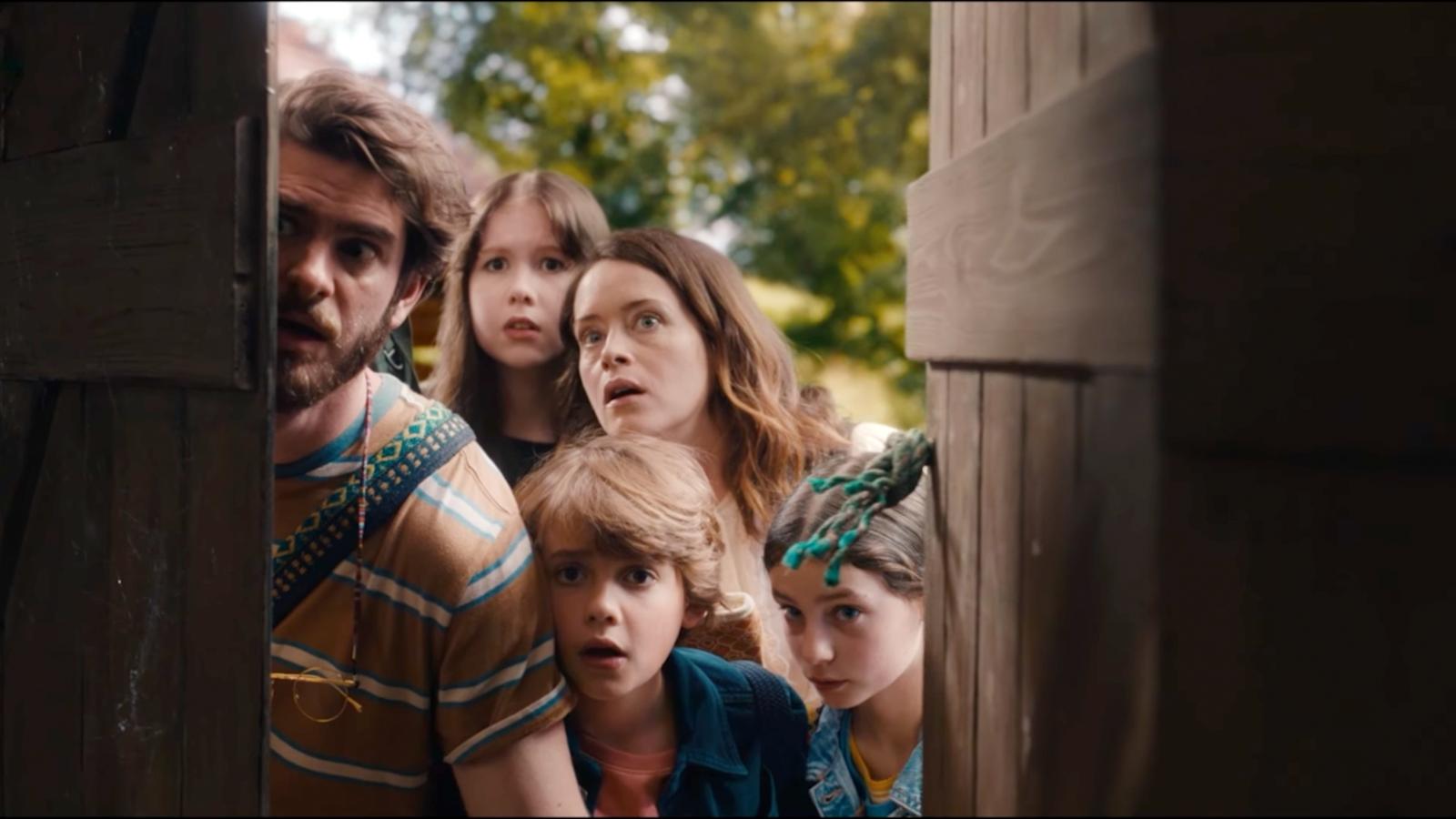

The Faraway Tree books may therefore contain something more personal than a conventional fairy-tale motif: not a direct recreation of Enid’s childhood, but an imagined correction of it. Jo, Bessie and Fanny have the supportive family that Enid herself did not, despite their poverty.
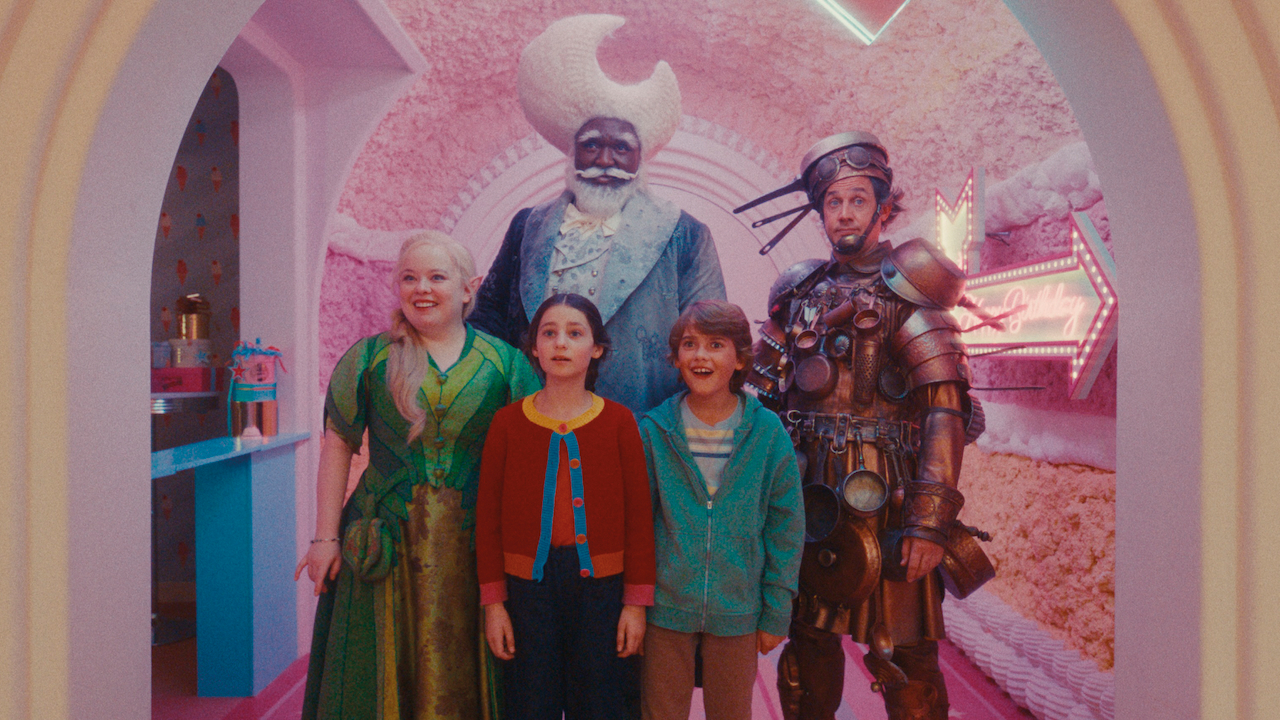
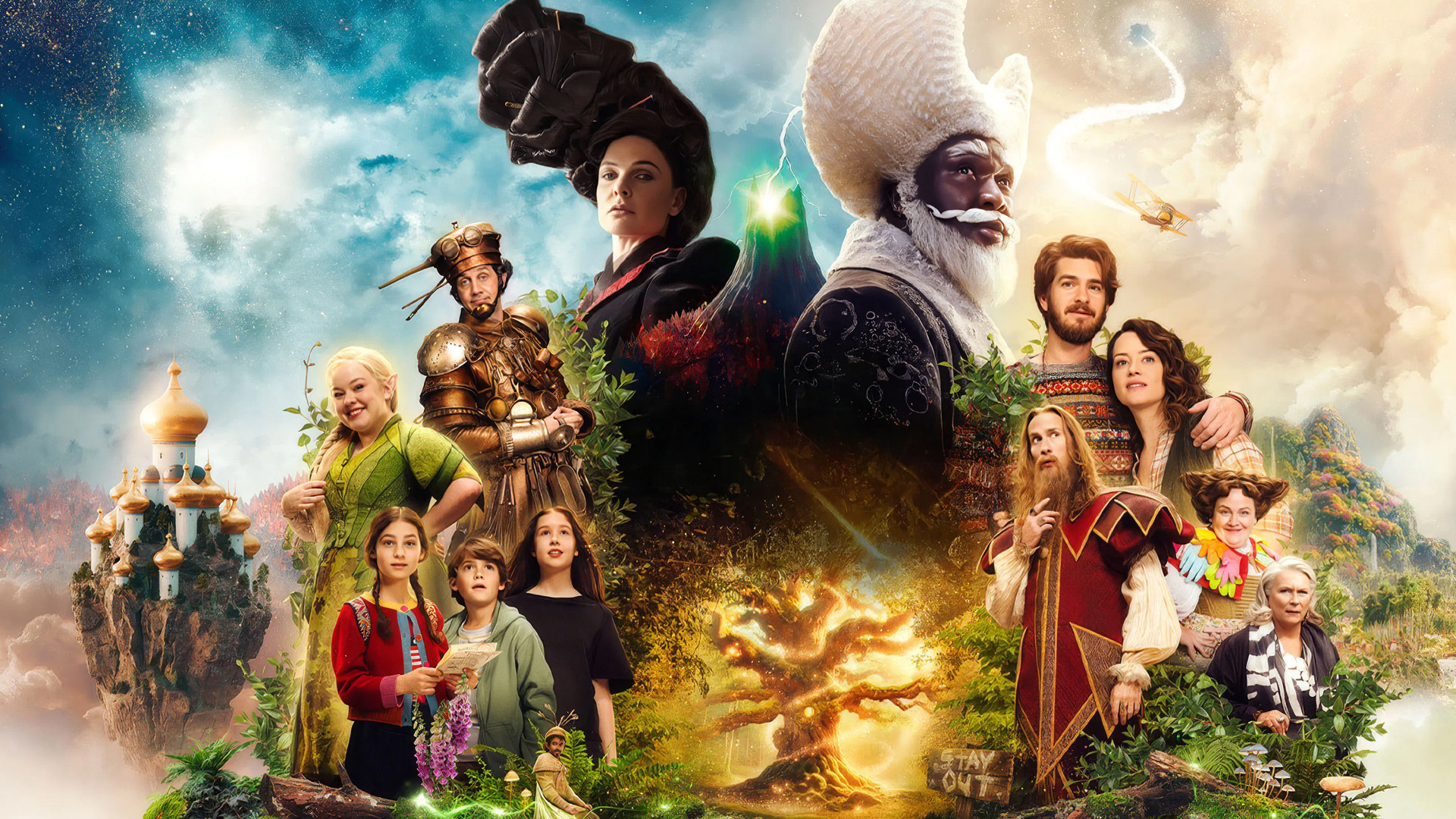
From this perspective, Simon Farnaby’s script for The Magic Faraway Tree captures the spirit of the books remarkably well while addressing current concerns, particularly an over-reliance on technology. Its central concern is a family learning to pull together through adversity. I am not even sure that Enid would have been entirely horrified by the idea of a stay-at-home father while the mother goes out to work. A little-known detail about Enid’s second husband comes from her agent, George Greenfield, who described him as ‘interferer’ in her career, and as ‘one of the most stupid and philistine men I have met’. Perhaps Enid would have enjoyed the subversion.
She would, however, almost certainly have been horrified by the children’s dependence on screens. Many of Enid’s books feature children whose lives are cramped, restricted or unhealthy in the city and who improve immeasurably after moving to the country, where they gain fresh air, freedom and physical adventure. The film’s concern with children absorbed by devices is therefore modern, but its solution is thoroughly Blytonian: remove them from artificial distractions, place them in the countryside and allow imaginative adventure to restore both the children and the family.
So what would Enid make of the modernisation of The Magic Faraway Tree? Perhaps the better question is whether it has really been modernised as radically as some viewers claim. Did Enid not herself create a kind of parallel, warless England into which children could escape? Her books are more socially dated than historically.
The persistent psychoanalysis of Enid has also encouraged critics to overlook the pedagogical dimension of her work, which is surprising given how overtly didactic her books are. The psychologist Michael Woods argued that Enid ‘was a child, she thought like a child and she wrote as a child’. But Enid did not think or write as a child. She thought and wrote as a teacher, even in her famous ‘undermind’, where she claimed to picture her stories in a state of unconsciousness. The question, then, is not whether The Magic Faraway Tree has been ‘too modernised’, but whether it still teaches children how to see the world. On that measure, it remains unmistakably Blytonian.